Creating an Ideal School
- Paige Hicks, Ed.S., NBCT
- May 5, 2019
- 3 min read
Recently, I tasked my Introduction to Psychology students with creating their Ideal School. Before they began, we brainstormed some of the things they needed to consider. They mentioned school rules, courses, school calendar, and clubs, among other things. I told them to imagine a world where there were no laws or other constraints that schools have to follow today and create the best possible environment to produce an educated populace.
While the students worked, I sat away from them and did not interject. At the end of the first day, students had created a Google Slides presentation with their decisions, which they shared with me. I was surprised at some of their suggestions, mostly because of how traditional they were. I fully expected a complete revamping of high school. Traditional ideas advanced by the students included block scheduling, assigning homework (although optional in their school), requiring core classes, and including career/technical education. Their only mention of teachers was being able to be matched to teachers who would best meet their needs. None of the students mentioned wanting school to be easy or optional.
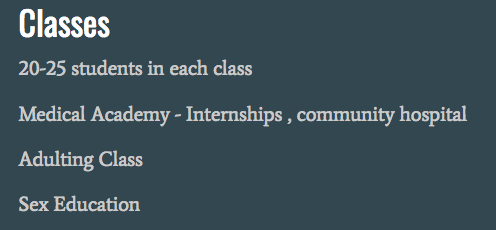
On the second day, students worked toward creating their course catalog. While not as specific as a true high school’s would be, they recommended two classes that surprised me - Adulting and Sex Education. (We have since made a list of “adulting” topics they would like to know, like doing taxes and managing bank accounts, which we will dedicate some class time to before school gets out for summer). They also wanted more real-world experiences in their Ideal School. We currently have a bank in our school; they wanted to create a school-based health clinic where students could intern and a museum for art students. They also wanted more psychology course offerings (!) where the senior year course would have an internship component, like a student counselor.

The third day of work on the Ideal School fell on a day when we were discussing motivational theories in class. I introduced Maslow’s Hierarchy of Needs, and we made a graphic organizer with real world examples as well as examples of how our current school meets their needs. After I was confident they understood the hierarchy, I told them to think about their Ideal School and make sure that it offered opportunities to meet each level of needs. In addition to traditional honors and awards, they also wanted to recognize out-of-school accomplishments to meet esteem needs. They had opportunities for every need to be met.

Quite possibly the most surprising thing over the three days of work is that there was no mention of sports at their Ideal School, especially considering there are multiple athletes in the course.
There are 17 students in the class. It includes 5 males and 12 females. 10 students are freshmen, 2 are sophomores, 3 are juniors, and 2 are seniors. There are 7 Students of Color. 11 students receive free or reduced lunch. This class is an elective offered to all grades; several plan to take Advanced Placement Psychology next year.
After discussing all this with my students and asking social media friends, I thought about what my Ideal School would look like if there were no laws or regulations. I’ve compiled a list. I’m sure there are more, but this is what I came up with over the weekend.
My Ideal High School would:
- Meet student needs but also create a good working environment for faculty and staff.
- This would include basic needs like food and safety but also needs like rigorous academic courses, multiple athletic opportunities, and clubs/organizations for varied student interests.
- Have multiple ways to honor or recognize students, and take care to ensure no group is marginalized.
- Prioritize mental health for both students and adults.
- Emphasize academics and rigor at every level, and equip teachers to differentiate rigorous assignments so every student could be successful.
- Approach instruction as if every student had an IEP, even if it’s not the traditional legal document.
- Have students write the course selection guide with teacher assistance, so every course offered (especially electives) would have student interest.
- Have class sizes at 25 or less in most cases.
- While I understand the current perception is that class size doesn’t matter, my MO in the classroom is to get to know as much about students as possible. This is so much easier with a manageable class size. Not only do larger classes mean more students to get to know, they also make engaging students to create opportunities to have one-on-one or small group discussions with students more challenging.
- Prohibit mandatory standardized testing.
- Cultivate school spirit at every chance.

- Provide teachers autonomy in the classroom while also supporting teachers as they develop their instructional practice.
- Create a comfortable space for learning. Rugs, lamps, natural light, and comfortable furniture would be staples.


-Have a Power Hour.
- Of course, have unlimited funding. :)
What does your Ideal School look like?


My AVID class is currently working on a similar assignment. They have mentioned the need for Sex Ed and Adult Skills in the curriculum as well.