5 Ways to Advocate for Kids
- Paige Hicks, Ed.S., NBCT
- Apr 14, 2019
- 4 min read
Dictionary.com defines advocacy as “the act of pleading for, recommending, or supporting.” Part of our role as educators is advocating for students. Below you will find five ways to advocate for students.
**Disclaimer: I am only comfortable writing about my personal experiences. This post is in no way intended to be a list of my accomplishments. I would love to hear other ways you advocate for your students! Please feel free to comment and share your experiences.

1. Write letters of recommendation. After serving on numerous local scholarship committees, I realized that the power of a good letter of recommendation cannot be underestimated. Students need letters of rec for all kinds of things. I’ve written them for college admissions, scholarships, Eagle Scout, summer internships, jobs, you name it. What I’ve learned is that the best letters include a personal story about the student. If you aren’t confident in your writing, use a template. There are thousands on the Internet. If you cannot write a strong recommendation for whatever reason, politely decline the student’s request. That gives the student the opportunity to ask someone else who may be better able to recommend them. But whenever possible, write the letters! :)
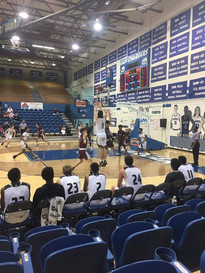
2. Attend their events. They notice. I know it’s impossible to go to everything that every student does. But make an effort when you can. (It’s also a great opportunity to communicate with parents, but I’ll save that for another post). If things don’t go their way, you can commiserate with them, and even better, when they do go well, you get to celebrate with them! There isn’t much better than seeing a kid’s face light up when they’ve accomplished something they’re proud of. When I can’t go an event, I try to ask the student how it went to at least let them know I support them as a whole person.






3. Meet their needs. One of the most difficult parts of the National Board process for me was the student need. National Board candidates are required to identify a student need, advocate for a change, and then record the results and effects. It was admittedly one of the last pieces I wrote. However, once I got my head wrapped around it, I realized this is something I do regularly. I started a social studies honor society at my school because I realized our school did not offer a place for students who were passionate about that area of study. While we are just getting started, my hope is to support kids who want to pursue careers in the social studies. This is a more elaborate example, but it could be something as simple as having peanut butter crackers on hand if a student gets hungry.

4. Let them use their voice. Rather than “us versus them,” make it “we.” Recently, my psychology students identified that most of their stress was school-related. I took to my social media, suggesting that perhaps we are doing something wrong if school is stressing students that much. Almost all adults disagreed in one way or another. I had a couple parents private message me, thanking me for shining a light on this issue, but overwhelmingly it felt like the adults just didn’t believe the kids. We spent parts of the next few months in class researching stress and stress management. We contrasted typical adult stress (How can I keep my children safe? Can I pay the mortgage this month?) to typical teenage school stress (I am worried about a test. I can’t work part-time, do all my homework, and get enough sleep). With administrative support, the students created a stress management seminar for the entire student body. Because our school year has been a little chaotic, we have not been able to implement it yet, but those psychology students felt empowered and felt like there were at least some adults who listened to their voices.
5. Love them. I know, I know. Common sense, right? “If you don’t care about them, go home.” I get it. But sometimes advocacy is hard. Sometimes, you have to advocate for students even when it may not feel like they deserve it. Sometimes you have to stand alone in your advocacy. Loving students through their mistakes is one of the most challenging parts of advocacy. Once, I had a connection to a student that had gotten themselves in some serious trouble with the school. While not excusing the behavior, I went to an administrator because I wasn’t sure how much the administrator knew about the student’s background. The administrator made a comment that they’d been waiting for someone to come in on the student’s behalf. They explained what was going to happen, which I was able to relay to the family. It did not change the discipline (nor was it intended to), but I felt better getting it off my chest, the administrator felt better knowing the child had an advocate, and the family felt better knowing someone was going to love the child through the process, even though they had made a mistake.
If it’s a student you don’t feel particularly motivated to advocate for, please don’t discourage others from being their advocate. I once had a colleague tell me they didn’t know why I was helping a particular student because that student was dishonest and was constantly disrupting others' learning. I told the colleague that was exactly why I continued a relationship with that student. I felt like the student needed someone on their side, even though they made consistent behavioral choices that were not constructive. I realized I had said similar things to colleagues in the past, so I have earnestly tried since then to support colleagues when they advocate for a student, no matter how challenging I found the student.
Please share ways you have advocated for your students! Advocacy is one of my favorite parts of the job, and I am always looking to grow in this area.



I love this one!